
The shift
The first wave of AI adoption was driven by novelty. Teams added standalone apps because they were fast to test and easy to demo.
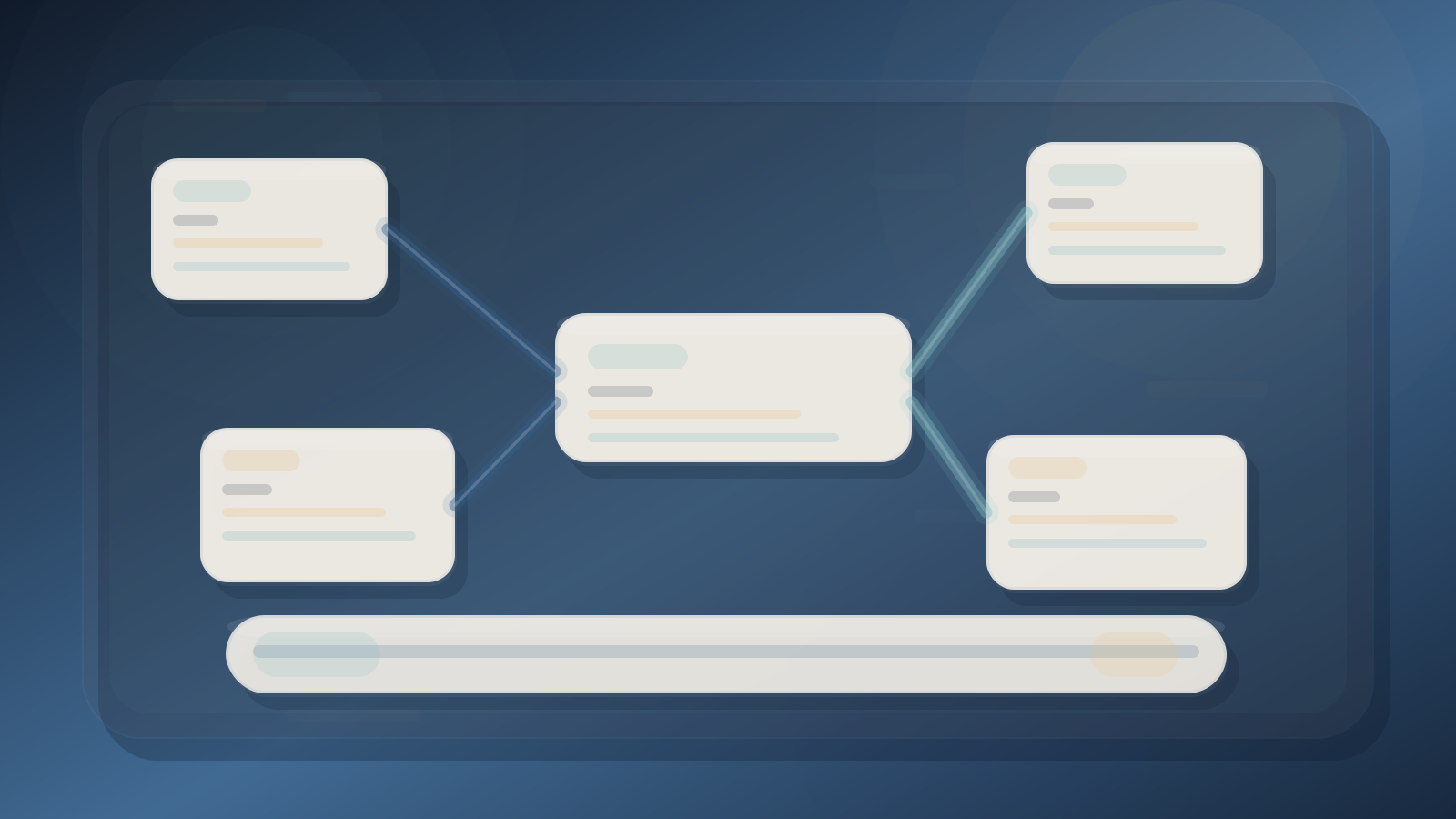
The current phase looks different. Operators want AI inside the systems they already use, which makes workflow coverage more important than raw model variety.
- Fewer point solutions with overlapping prompts
- More emphasis on search, summarization, and drafting inside current tooling
- Higher demand for governance around data access and review
What this means for buyers
Tool selection is starting to resemble systems design. The best stack is usually the one that removes handoffs between capture, review, and action.
That changes how content teams, sales teams, and operations leaders evaluate vendors. A smaller stack with better integrations can outperform a broader stack with weak operational fit.
Practical takeaway
If a tool does not clearly connect to a recurring business workflow, it will be hard to justify after the first trial. The next buying decision should start with the workflow, not the feature list.
Need help implementing this in your business?
Visit the studio for AI knowledge assistants, workflow automation, tool integrations, and practical delivery support.
Visit studio.decodedlab.ai